
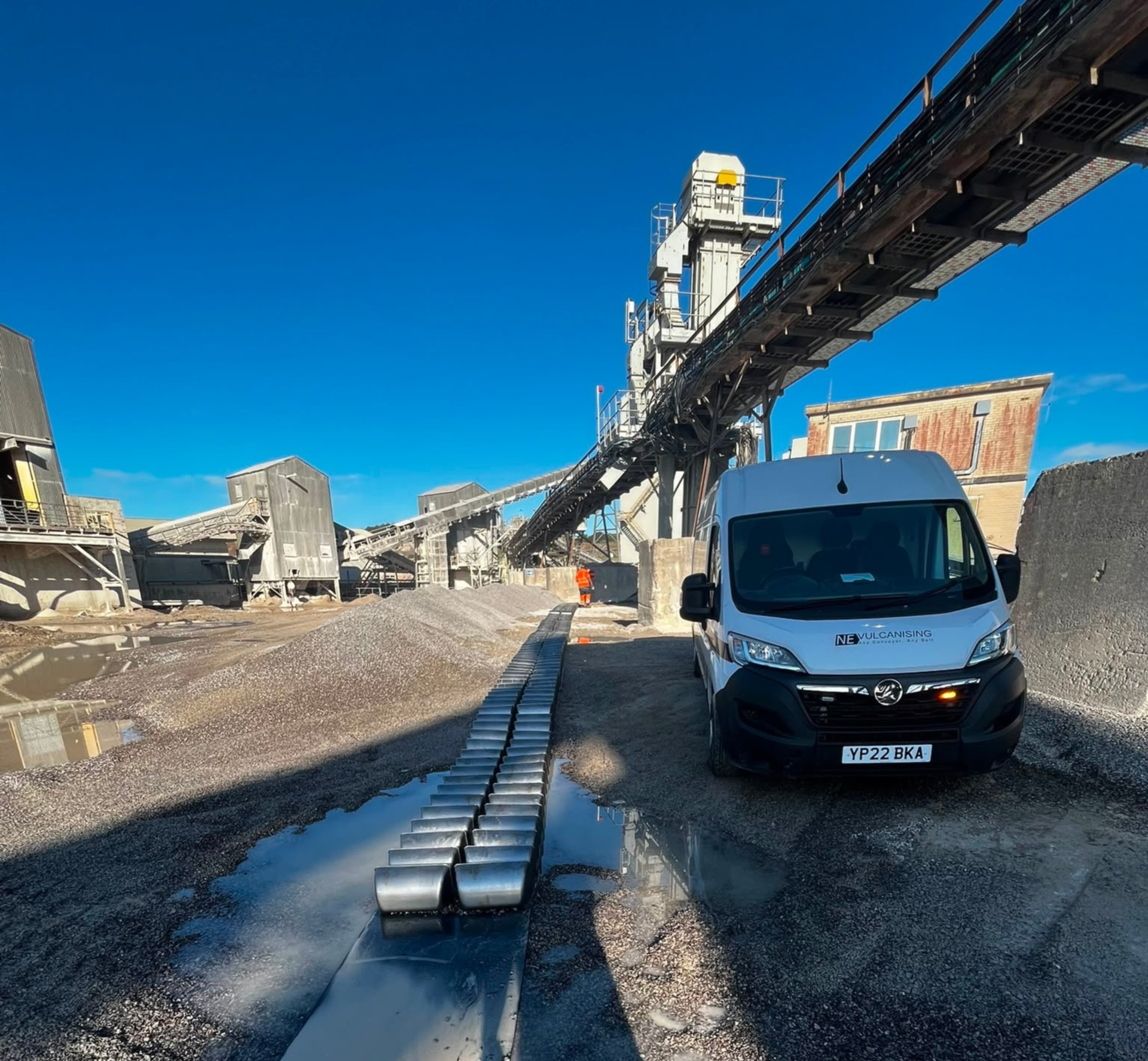
We know that cement, concrete, silica sand and asphalt plants rely on a steady flow of material through every stage. A failed feed, transfer or elevator belt can starve the next process, back material up through the line and bring production to a stop.
N E Vulcanising supports cement works, concrete batching and precast plants, asphalt plants and silica/industrial sand operations across the UK with belt supply, on-site fitting, vulcanising, repairs and maintenance.
Whether you need a belt prepared for a planned shutdown, a bucket-elevator belt changed, a tracking fault corrected or urgent support following a breakdown, we have the stock, equipment and experience to deal with it.
Whether it is a cold-feed belt below asphalt bins, an aggregate-feed belt at a concrete plant, a transfer feeding a mill or a silica-sand conveyor serving a screen or dryer, we can support the belting throughout the line.
We support the fixed conveyor systems used to move, process, store and load mineral products:
- Cement & Lime: Limestone feed, crusher and transfer conveyors, stockpile and reclaim belts, clinker and gypsum handling, and bucket-elevator belts.
- Concrete: Aggregate-feed, batching and weigh conveyors, hopper and mixer feed belts, bucket elevators and load-out systems.
- Asphalt: Cold-feed, RAP, collecting and charging conveyors, plus hot aggregate and filler elevator belts.
- Silica & Industrial Sand: Feed, wash-plant, drying, screening, grading, storage and load-out conveyors, along with bucket elevators.
Cement, asphalt, concrete and silica sand do not ask the same thing of a belt.
That may mean heavy-duty, abrasion-resistant rubber for limestone, aggregate, clinker and silica sand; heat-resistant belting for hot material; heat- and oil-resistant compounds around asphalt duties; or specialist elevator belts for vertical lifting.
Chevron, cleated and sidewall belts are available where incline, grip or controlled feed matters, while rip-stop belting can be specified where impact, puncture or tearing is a genuine risk.
We account for the material, temperature, load, impact, belt speed, pulley diameters, incline, cleaning requirements and jointing method before preparing the replacement.
It is not just a case of matching the width and putting the same thing back on.
On a fixed process plant, the belt is often only part of the problem. A belt running off, slipping or wearing prematurely can point to damaged rollers, worn lagging, poor tracking, a seized bearing, a worn pulley or failed skirting at a transfer point.
We supply, fit, join, vulcanise, repair and maintain conveyor belts, then deal with the associated fault where it is practical to do so.
That includes full belt changes, hot-vulcanised joints, cold-cure repairs and mechanical fastening, alongside tracking correction, rollers, idlers, bearings, pulleys, skirts, scrapers and drum lagging.
You are not left with a replacement belt fitted around the same problem that damaged the last one.
We carry out complete bucket-elevator belt changes, including removing the old belt, stripping and retaining suitable buckets, installing and joining the replacement, then refitting the buckets in the correct positions.
The labour, lifting equipment and vulcanising kit come with us. Access, belt weight and bucket numbers are considered beforehand so the work can be planned around the available shutdown. It is a different job to changing a straightforward transfer belt, and it needs treating that way.
A sound belt with local joint, edge or surface damage may be repairable.
Widespread carcass damage, heat damage, stretching or repeated failures may make replacement the better use of your money.
We assess the whole belt and any underlying tracking or component fault before recommending the practical option.
We work around production runs, planned shutdowns and maintenance windows, including evenings, nights and weekends.
Our engineers are also available 24 hours a day, 7 days a week for breakdowns.
Based in Stoke-on-Trent with fast access to the major transport links, we cover the Midlands and travel nationwide. When a conveyor failure stops the line, we arrive prepared to carry out the work.
We hold 100,000+ metres of conveyor belting, in widths from 500mm to 2,600mm.
That stock allows many replacements to be cut and prepared without a belt manufacturer’s lead time.
Our conveyor experience spans 4 decades. Our engineers bring their own generators, mobile presses and lifting equipment, and are competent in working at height, harness use, lifting operations, forklift work and MEWP operation.
That matters on elevated bucket elevators, fixed transfer lines and access-restricted plant- where the right labour and equipment need to arrive with the belt.
On fixed cement, concrete, asphalt and silica-sand systems, a survey can pick up worn joints, belt damage, tracking faults, tired lagging and failing rollers before they become a breakdown.
We record each belt, identify what needs doing now and what can be planned, and help you hold the right spares.
That means less emergency downtime, fewer rushed decisions and better use of your maintenance budget.
From cold-feed and transfer belts to bucket elevators, batching systems and load-out, we can support the belting across your mineral-processing operation.
Whether it is planned work or an urgent breakdown, we will help you get it sorted.
Comprehensive Nationwide Support
Whatever the belt, whatever the problem, we’ve got the experience, equipment and know-how to get the job done.